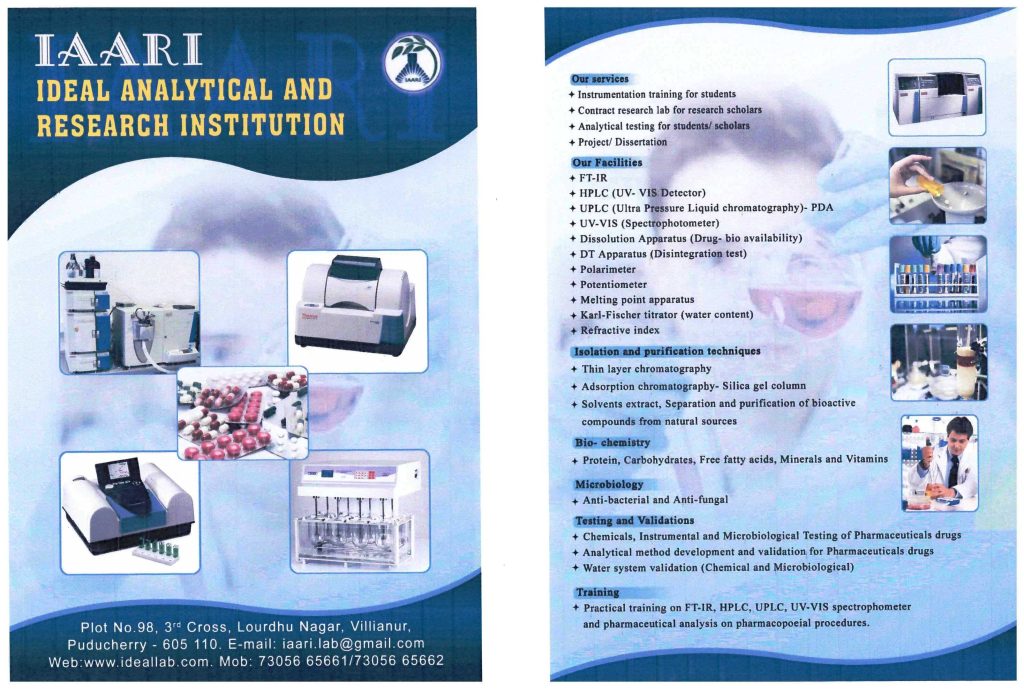
Instrumentation Training: Bridging the Gap Between Theory and Practice
Introduction In the ever-evolving world of science and technology, hands-on experience with advanced instrumentation is crucial for students and professionals alike. Instrumentation training is designed to bridge the gap between theoretical knowledge and practical application, providing participants with the skills needed to excel in their respective fields.
Why Instrumentation Training is Essential Theoretical knowledge, while important, is often insufficient in preparing individuals for real-world challenges. Instrumentation training offers hands-on experience with cutting-edge equipment, ensuring that participants are not only familiar with the technology but also proficient in its use. This is particularly important in fields such as pharmaceuticals, biotechnology, and analytical chemistry, where precision and accuracy are paramount.
Key Components of Instrumentation Training A comprehensive instrumentation training program should cover several key areas:
- Equipment Familiarization: Participants should be introduced to various instruments, learning about their components, functions, and applications. This includes understanding how to operate the equipment, troubleshoot common issues, and maintain the instruments to ensure longevity.
- Practical Application: Beyond familiarization, participants should engage in hands-on exercises that simulate real-world scenarios. This could involve conducting experiments, analyzing samples, and interpreting data, all while under the guidance of experienced professionals.
- Data Analysis: Understanding how to analyze and interpret data generated by the instruments is a critical skill. Training programs should include modules on data processing, statistical analysis, and result interpretation, enabling participants to draw meaningful conclusions from their experiments.
Benefits of Instrumentation Training The benefits of instrumentation training are manifold. For students, it provides a competitive edge in the job market, equipping them with practical skills that are highly sought after by employers. For professionals, it offers an opportunity to update their skills, keeping pace with technological advancements in their field.
Furthermore, companies that invest in instrumentation training for their employees can expect improved efficiency, accuracy, and productivity. Well-trained staff are more likely to use the equipment effectively, reducing errors and enhancing the quality of the research or production processes.
Conclusion Instrumentation training is an investment in the future, providing participants with the skills and knowledge needed to excel in their careers. As technology continues to advance, the importance of hands-on training with state-of-the-art equipment cannot be overstated.